About Us
Pase is an independent creative studio dedicated to research and design in music, sound, and their interaction with space.
Pase is a creative studio based in Venice, a collaborative platform open to artists, students, and professionals working with sound and space. Our work is grounded in a design process — conceptual, spatial, and technical — that defines the conditions for listening and expression. The approach combines artistic research, the development of dedicated tools and software, and the production of commissioned works in both public and private contexts. Activities include spatial audio, sound design, multimedia installations, performances, workshops, artist residencies, and advanced training programs in collaboration with conservatories and universities. Each project emerges and evolves through shared practices and long-term collaborations, guided by continuous experimentation and a close dialogue between artistic intent and technological application.
News
31/07/2026
Keiichiro Shibuya – Memory, AI & the Android Opera
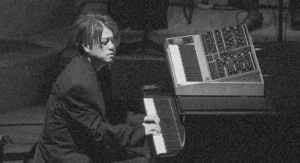
On July 31, 2026, Pase presents an Open Studio with composer and artist Keiichiro Shibuya, developed as part of his residency at Studio Pase in Venice. The encounter will take the form of a lecture and listening session exploring memory, artificial intelligence, voice, and musical creation through excerpts and video materials from his acclaimed Android Opera. During the residency, Shibuya is developing a new work for electronics and multichannel spatial audio, commissioned for a production premiering next year. The evening offers a chance to encounter this research in progress and the questions behind it.

08-10/06/2026
Carlo Laurenzi –Concatenative synthesis across sound and notation
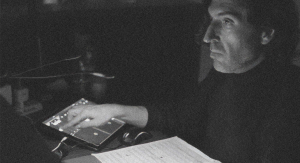
On June 8–10, 2026, Pase, in collaboration with SaMPL and the C. Pollini Conservatory of Padua, present a masterclass led by Carlo Laurenzi focused on compositional approaches based on concatenative synthesis and on the relationship between sound analysis, notation, and resynthesis. The programme will introduce participants to methods for thinking and “visualizing” electroacoustic sound as a compositional framework, while exploring audio descriptors and software tools for concatenative synthesis through examples developed at IRCAM. Across the sessions, the masterclass will also include collective composition workshops and an acousmatic concert of works by Carlo Laurenzi.
18-19/04/2026
Miller Puckette – An electronic music repertory in Pure Data
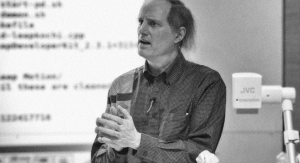
On April 18–19, 2026, Pase, in collaboration with SaMPL, the C. Pollini Conservatory of Padua, and the Venice Conservatory, will host a lecture led by Miller Puckette focused on electronic music practice through Pure Data. The programme will introduce participants to the software environment through the exploration of patches from the electronic music repertory, offering insight into how sound processes are structured and developed. Across the sessions, the lecture will also address real-time analysis and resynthesis of instrumental and vocal sounds, while opening a space for discussion around participants’ own projects and broader questions in contemporary electronic music.
18-19/02/2026
Paul DeMarinis: Sound and Materiality – Media Archaeology
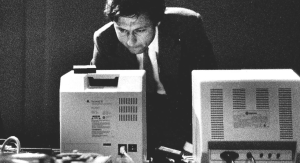
In February 2026, Studio Pase, in collaboration with SaMPL – Conservatorio C. Pollini Padova, will host a two-day masterclass with Paul DeMarinis. Day one is a lecture with case studies spanning early and recent works, tracing the axis between sound and materiality with detours into the histories of technology, communication, and encoding. Shifting between media archaeology and a social-political lens, the session addresses embodiment, site specificity, and installation. Day two is a roundtable dedicated to participants’ research and discussion. The format blends presentation, listening and dialogue, showing how devices and infrastructures shape what we hear.